
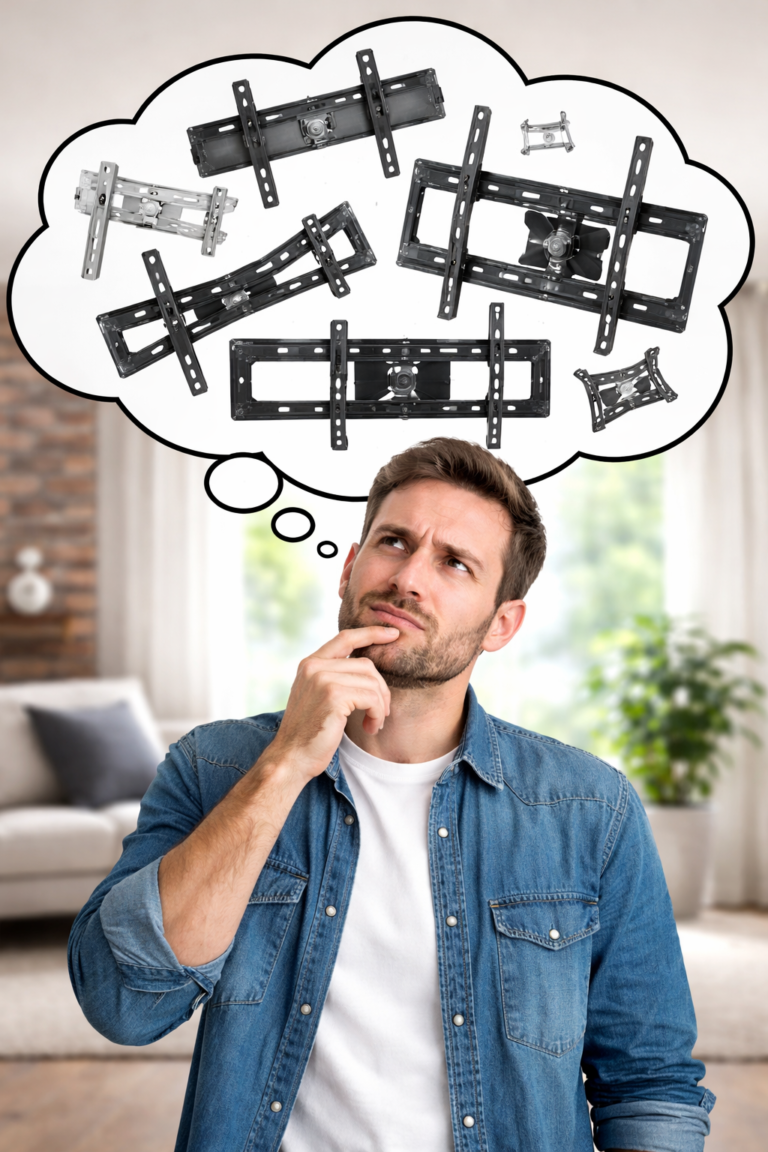
What Type of TV Wall Mount Should I Buy? A Professional Installer Explains

What TV Mounting brackets should I choose

If you’ve ever searched “what type of TV wall mount should I buy?” you’ve probably noticed something: every bracket claims to be universal.

Here’s the truth from a professional installer — it’s not just about the bracket. It’s about stud spacing, wall material, wall plate size, TV weight, and mount type. Choosing the wrong combination is how TVs fall.

At Mr Home Guy, we stock all standard wall mounting brackets so we can complete your job in one trip — and more importantly, we select the correct bracket for your wall structure. That’s one reason we’ve never had a TV fall.

The 3 Main Types of TV Wall Mount Brackets

1. Fixed (Low-Profile) Mount

A fixed mount keeps your TV tight to the wall. It does not tilt or move. This is ideal when your viewing angle is straight on and glare is not an issue.

2. Tilting Mount

A tilting mount allows you to angle the TV downward. This is commonly used when mounting above a fireplace or higher on a wall.

3. Full Motion (Articulating) Mount

A full motion mount extends outward and swivels left or right. These are great for corner installations or open-concept spaces — but they require the strongest structural support.

Why Stud Spacing Matters More Than the Bracket

Most homes in Boston have 16-inch on-center studs. Some newer builds use 24-inch spacing. This detail determines which wall plate can be used safely.

For example: You cannot put a 16-inch wall plate on 24-inch stud spacing with a full motion bracket and expect it to hold. The leverage created when the TV extends outward increases force on the lag bolts. That’s physics — not marketing.

This is why we evaluate stud placement before choosing a mount. It’s not about what’s on sale at the big box store — it’s about structural integrity.

Wall Type Also Determines the Correct Mount

Not all walls are drywall over wood studs. We routinely mount TVs on:

  • Drywall with wood studs
  • Metal studs
  • Plaster and lathe
  • Concrete or masonry
  • Brick fireplaces

Each material requires different anchors, bolts, and sometimes specialty mounts. Choosing the wrong hardware is one of the main reasons DIY installations fail.

What Type of Bracket Should You Actually Buy?

The honest answer? Don’t buy the bracket first.

Measure your stud spacing. Confirm your wall material. Decide whether you need tilt or full motion. Then choose a bracket with a wall plate designed for your configuration.

Or let us handle it. We stock all standard wall mounting brackets and bring the correct hardware based on your wall type — so your installation is done safely, securely, and in one visit.

Why We’ve Never Had a TV Fall

We don’t guess. We evaluate the wall, confirm structural support, choose the proper bracket, and install using professional-grade hardware.

That’s the difference between buying a bracket — and hiring a professional installer.

Scroll to Top